Wednesday, September 08, 2010
   
TEXT_SIZE
  • Province of Cotabato
  • Province of Cotabato
  • Province of Cotabato
  • Province of Cotabato
  • Province of Cotabato

Natural Resources

LAND CLASSIFICATION

Of the province's total land area of 656,590 hectares, 149,972 hectares or 22.84% are classified as alienable and disposable while the remaining 506,618 hectares or 77.16% are forest lands.

Of the total forest lands, 3,825 hectares or 0.76% are unclassified public forests while 502,793 hectares or 99.24% are classified public forest. Forestlands are preserved for timber production, grazing and marshes, national parks and bird sanctuaries.  Forest reserves and timberlands take the biggest share of the total classified forestlands.

The alienable and disposable land of the province has a smaller area than that of the forestlands.

LAND USE OPPORTUNITY

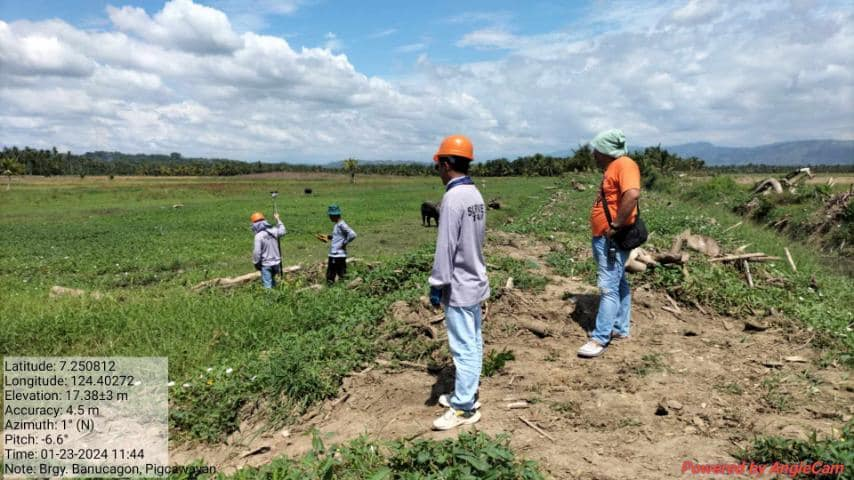
The gently rolling to hilly area is suitable to seasonal crops while permanent crops are suggested for the hilly to mountainous areas. Cultivation of irrigated rice is practiced in the Municipalities of Pigcawayan, Libungan, Midsayap, Kabacan, Carmen, Mlang and Makilala. This is so because of the presence of River Irrigation Systems in these areas. Intensive cropping are best recommended in agricultural lands dominated by clay type soil.

SOIL TYPES

There are about 19 types of soil found in the province of Cotabato.  Mountain soils, which are undifferentiated, are found at the eastern and western part of the province.  Clay loam soil is found in the municipalities of Carmen, Tulunan, Pigcawayan and Pikit while the municipalities of Aleosan, Midsayap, Banisilan and part of Magpet, Pigcawayan and Pres. Roxas have a clay type soil.  Sandy clay loam soils characterize those in the Municipalities of Makilala and Mlang and the City of Kidapawan.

The most prevailing soil types in the province are of clay loam type.  These types are mostly found in the plains, which are best suited for intensive crops like corn, rice and other permanent crops.

MINERAL RESOURCES

Mineral products found in the province consist of non-metallic products defined as limestone, sand and gravel, soil and white clay.  The first three items are considered as construction materials while the white clay is a good raw material for porcelain production and considered as one of the best white clay resource in the country.  It is abundant in the municipalities of Banisilan, Pres. Roxas, Mlang, Makilala and Magpet particularly in the barangays of Dolis, Inac and Nowa.

The province has several ceramics processing which are either unregistered or registered enterprises. Magpet Ceramics located at Magpet, Cotabato is an LGU-managed enterprise that specializes in the making of pots and jars, table wares, novelties and art wares.

AQUATIC RESOURCES

The province is traversed with several rivers and creeks, which abound with freshwater fish.    Many people depend much on freshwater fishing especially those in the vicinities of Liguasan Marsh and Libungan Marsh.

POWER RESOURCES

The major power source of the Mindanao Grid is the Lanao Lake-Agus River hydro-electric power complex with a total power potential of 1,000 megawatts. Supplementing the hydro-potential power of the Mindanao Grid are the Cotabato and Agusan River Basin.  The basins have potential of 1,605 megawatts and 991 megawatts, respectively or an aggregate total of 2,596 megawatts.

In support to the province's growing economy, the Philippine National Oil Company (PNOC) has commissioned the generation of at least 52-megawatt sourced out from the Mt. Apo Geothermal Project.  An additional capacity of 50 megawatt from the project is currently worked-out to ensure a stable energy supply for the province and its neighboring areas.

MEDICAL OUTREACH PROGRAM

LALA Cares

Site Visitors

mod_vvisit_countermod_vvisit_countermod_vvisit_countermod_vvisit_countermod_vvisit_countermod_vvisit_countermod_vvisit_counter

We have 19 guests online